
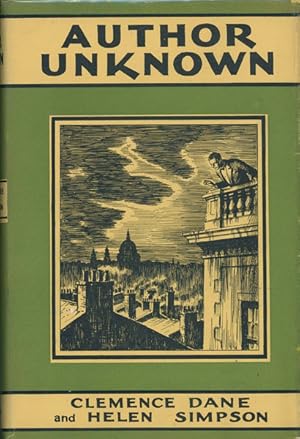
Horrie Pedlar is the first and only woman publisher in 1930s London, and this novel opens with the announcement of a party she’s giving for the re-emergence from exile of the writer Marmion Poole. His romantic peccadillos years before resulted in his leaving London, but Horrie thinks it’s about time he returned. At the party, he announces he has written his memoirs, always an issue with a mystery novel.
Horrie is pretty much beloved. Although a good businesswoman, she is generous and kind and has collected a lot of grateful and sincere friends and employees. But at the very beginning of the novel, she has a conversation with Gilda Bedenham, a recent employee, to tell her she’s not doing well at her job and she wants to reassign her. Gilda already feels an obligation to her and is prickly about it, so she quits, in fact walks off the job. Horrie then sends her young, bright PR man, Koko Fry, to check on her and maybe get her to come back.
Marmion Poole is attractive and dramatic. He is full of charisma and full of himself. The reaction to his announcement of a memoir upsets a lot of people, especially the husbands of the many women with whom he’s had affairs.
Horrie is thinking of retiring, going out while she’s still doing well. She wants to leave the company to be led by her right-hand man, James Savory, Koko, and Marmion Poole, a fact she tells Savory but not the others.
However, there are problems with Marmion. The office is receiving calls from society people who want to read the manuscript. Horrie has read it, though, and tells Marmion she won’t publish it. She thinks it’s vengeful and says he should take the high road or rewrite it as fiction.
This is an unusual mystery novel. No one is actually killed until almost 200 pages in, for one thing, and then it is Horrie, whom we have come to like. She is found in the courtyard below her apartment, and the inquest decides that she fell from the fire escape late at night coming in through the unlocked door there because she forgot her house key.
Another oddity is the presence of Sir John Saumarez, who solved the previous mystery by Dane and Simpson. He’s at the party and is around at the denoument, but does nothing to solve the crime, if there was one.
So, what is the novel doing in the first 200 pages? It’s taking its time introducing the characters and portraying the London literary scene and doing it masterfully. Dane and Simpson’s characters are complex and believable, and we like almost all of them.
Well, of course, Horrie was murdered, but who killed her? Was it someone who wanted her out of the company immediately? Was it someone she caught destroying Marmion Poole’s manuscript, the ashes of which were found nearby? Was it Gilda, who lost her job and is now engaged in a romance with Koko? Marmion sets a trap to find out.
I am really enjoying these books by Dane and Simpson. They are good writers with a flair for characterization and dialogue. It’s too bad there’s only one more. I hope I can find a copy. (Update: right now, the cheapest copy I can find of the third book is priced at more than $400. Yikes!)

 What? Me Read?