Review 2152: #1940 Club! The Corinthian

Since this is my first post for the 1940 Club, I’ll include my list of other books published in 1940 that I have already reviewed:

I was happy to reread The Corinthian for the club because I hadn’t read it in some time. It is one of Heyer’s sillier, unlikelier plots, and I found it delightful.

Richard Wyndham is handsome, wealthy, impeccable in appearance, and bored. When a family deputation informs him it’s time he got married and tells him Melissa Brandon considers herself all but engaged to him, he calls on her. He finds an icy, self-possessed young lady ready to make a marriage of convenience to help her family financially. With the prospect of calling on her father the next morning, Richard goes out and gets drunk.

During his subsequent rambles, he spots a boy climbing out of an upper-story window on a rope of knotted sheets that is unfortunately too short. When he catches the boy, he finds he is a girl. Pen Creed is escaping her family, as her aunt is trying to force her to marry her cousin for her money. When Richard finds Pen will not go home, he decides to accompany her to make sure nothing happens to her. She is on the way to the home of her old friend, Piers Luttrell, who vowed to marry her five years ago.

Richard finds himself experiencing many new things, starting with a stagecoach ride during which the coach is overturned. They meet a thief on the stage and soon learn that someone has stolen the famed Brandon diamonds. As if that wasn’t enough, they find a murdered man, assist a damsel in distress, and end up telling many fibs. Richard soon enough realizes he’s in love with Pen, but he can’t say so while she’s under his protection—and perhaps she’s still in love with Piers.

Heyer is always amusing and I had a lot of fun with this one.

Related Posts

The Nonesuch

Cotillion

The Convenient Marriage

Review 2146: Country Dance

In the mid-19th century, Ann Goodman is a young woman whose shepherd father is English and whose mother is Welsh. At the beginning of this novella, Ann lives in Wales near the English border. Although she speaks and understands Welsh, she’s been raised by her father to despise the Welsh. She is promised to Gabriel Ford, an English shepherd who is jealous of her.

Ann has been living with her cousins for 15 years when her father summons her to the English side of the border to help care for her ailing mother. At that time, Gabriel gives her a journal so she can write what she is doing and he can check up on her. Ann faithfully records her life, giving us great insight into farm life at the time.

Ann’s father works for a Welsh farmer, Evan ap Evans. Evans begins to pay attention to her, but she avoids him or is rude to him and says she hates Welshmen. When Gabriel comes to visit her, Evans speaks an endearment to her in Welsh, which makes Gabriel break up with her.

After her mother’s death, her father sends her back again to her cousins—in fact, never shows her any affection—and Gabriel attempts to court her. But Ann is angry that he wouldn’t take her word that nothing was going on with Evans, and also that when Evans tried to put things right, Gabriel attacked him.

As Ann relates her everyday activities, a feeling of dread grows in the reader. It’s no surprise to us that things go badly wrong, because the Introduction tells us so. But Evans, the author not the shepherd, gives this simple story depth by bringing in Ann’s ambivalence about her Welsh/English mixed heritage. This is a deceptively simple, sparely written story that I enjoyed reading for this month’s Reading Wales

Related Posts

Fair Helen

The Unquiet Grave

See What I Have Done

Review 2144: The Underground Railroad

Cora is a slave on a brutal Georgia plantation. When a new slave on the plantation, Caesar, tells her he is going to escape and invites her to come, she at first refuses. But later her master’s brother inherits the plantation and sets his eye on her, so she and Caesar escape using a branch of the underground railroad.

Up to this point the book is grim and realistic, but Whitehead makes his underground railroad an actual train, destination unknown, and here the novel departs from reality so that Whitehead can make points about the evils of slavery and racism in all its incarnations.

Caesar and Cora arrive in what seems to be a utopian South Carolina, where the state has decided to educate and train slaves who have been freed. But there’s a deeper, darker subtext to the plan.

Determined to capture Cora is Ridgeway, an infamous slave-catcher. Cora’s mother Mabel disappeared when Cora was a girl, never to be seen again, and he took it as a personal failing. So, he’s determined to catch Cora, and he eventually turns up in South Carolina.

I have to admit I have problems sometimes with magical realism, and the combination of a real train and a South Carolina that never existed ground me to a halt. However, as Cora’s adventures continued, eventually I was charmed again and found the novel a powerful work of imagination.

Related Posts

Washington Black

The Nickel Boys

Harlem Shuffle

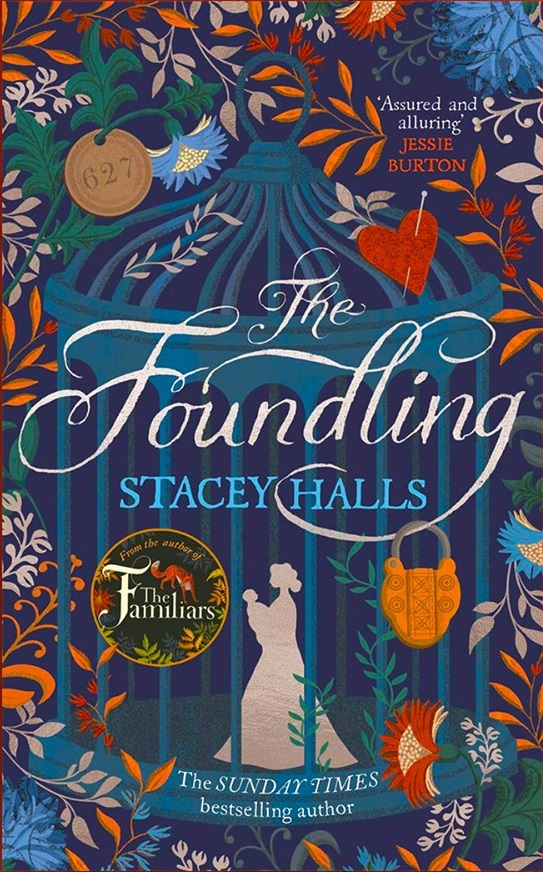
Review 2141: The Foundling

As a young woman, Bess Bright, a shrimp seller, has a first sexual encounter with Daniel Callard, a merchant. He disappears, leaving her with only a keepsake, half a whalebone heart, and a pregnancy. In 1748 London, she and her father, who already support her lay-about brother, cannot afford to keep the baby, so she takes her newborn daughter to a lottery at a foundling hospital, and she is accepted. She leaves the half heart as an identifier, so she reclaim her daughter.

Six years later, Bess believes she has saved enough money to redeem her daughter. But when she returns to the foundling hospital, she is told that she herself redeemed her daughter one day after leaving her, even identifying the keepsake.

Bess has discovered that Daniel died a few months after their encounter and that he was married. When she goes to consult Dr. Mead of the foundling hospital, he takes her to chapel, where she sees Mrs. Callard. With her is a six-year-old girl that Bess knows immediately is her daughter.

With unwitting help from Doctor Mead, Bess gets a position as a nursemaid with Mrs. Callard. There, she finds a strange household, where no one leaves the house except for the weekly chapel visit. Here the point of view shifts to that of Alexandra Callard, a woman full of fears and given to ritual.

I thought I had read a book by Stacey Halls before, but I was mistaken. I was at first disturbed by the first person narration, because it sounds nothing like a woman of Bess’s time and lack of education. Also, the first person narrative taken up later by Alexandra doesn’t sound like a different person. Hall could have easily avoided this problem by employing limited third person instead.

I got accustomed to the narrative style eventually and was pulled along by the story. However, without saying what it was, I found the ending spectacularly unlikely, especially the sudden change in Alexandra.

Related Posts

Birdcage Walk

The Mermaid and Mrs. Hancock

The Bass Rock

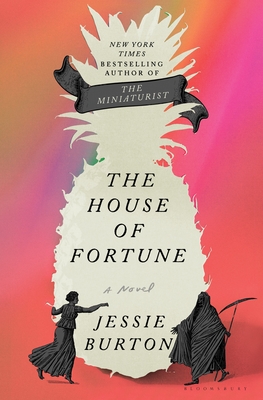
Review 2138: The House of Fortune

It’s 1705, 18 years after the end of The Miniaturist. Nella Brandt is worried about her niece Thea’s future. Although her husband Johannes’s death left them fairly well off, his black servant Otto has not been trusted by Amsterdam businessmen to keep the business running. Instead, Otto has been working for an import company in a low-paying job. They are broke, and the only future Nella can see for Thea is to marry. However, there is the issue of her illegitimate parentage as the daughter of Maris, Johannes’s sister, and Otto, the servant, which the family has kept secret.

Thea has other ideas. She is young and romantic and devoted to the theater, where she has befriended Rebecca, a principal actress. But she hasn’t been spending as much time with Rebecca lately, because she is in love with Walter Riebeeck, a set painter. She disdains Aunt Nella and her attempts at an appearance of respectability, in full teen rebellion.

Nella gets Thea an invitation to a society party in hopes that she’ll meet a young man, and she does meet Jacob van Loos, a young lawyer. At the party, though, Nella believes she senses the miniaturist, whom she has not heard of in 18 years. And Thea receives a miniature of Walter.

Although I didn’t find The House of Fortune quite as fascinating as The Miniaturist, it is still a worthy successor. However, there is so much arguing in the first part of the novel that it put me off, and Nella isn’t sympathetic until later in the novel. Plus, I found Thea to be a spoiled little brat at first and her romantic tragedy all too foreseeable. However, Burton still managed to make the book compelling.

Related Posts

The Miniaturist

The Muse

The Last Painting of Sara De Vos

Review 2133: The Secret River

Kate Grenville started out writing a nonfiction account of her great-great-great grandfather’s family, but she ended up with too many questions. So, she fictionalized their story and combined it with what she had read about other Australian pioneers.

William Thornhill grows up in poverty in early 19th century London, but he sees a future for himself when Mr. Middleton, a waterman on the Thames, takes him on as an apprentice. William has grown up with Sal Middleton, his boss’s daughter, and he marries her shortly after he reaches journeyman status. However, things go wrong for Middleton, and William finds his livelihood is much more difficult to earn. Finally, he is caught stealing part of a cargo to support his family.

Although he is sentenced to death for theft, William manages to get his sentence reduced to transportation, and his family is allowed to accompany him. In Australia, although life is primitive, it doesn’t take him long to realize he can make money there and maybe return to England in style. However, when he takes a job ferrying goods from a river where settlers have begun farming, he sees a piece of land he can own by settling on it.

Now begins a conflict, with William realizing he will never return to England and Sal only wanting to return. The conflict is heightened when some of the settlers have clashes with the aboriginal people.

I was certainly engaged by this novel, and I felt that Grenville did a good job of portraying the conflicts with the aborigines. Grenville’s characters are flawed but totally believable. She looks unflinchingly at Australia’s brutal origin story, which is very similar to our own.

Related Posts

A Room Made of Leaves

Salt Creek

Rush Oh!

Review 2126: The Flight Portfolio

As soon as I finished reading Julie Orringer’s The Invisible Bridge, I looked to see what else she had written, and that’s how I found The Flight Portfolio. This novel is based on true events with real historical characters except for Elliott Grant and some main invented characters.

It’s 1940, and American journalist Varian Fry is working in Marseille as the head of a charitable organization. Its mission is to help as many European artists, writers, and other intellectuals as it can to leave Europe and escape the Nazis. This mission is supposed to be legal but of course Fry has to use illegal means to evacuate people sought by the Nazis or by the Vichy government. The book begins with him trying to persuade the Chagalls to leave, but they think they are unassailable.

Into the chaos of the office work, including the eviction of the charity, comes a request for a meeting. It is from Varian’s old schoolmate at Harvard, in fact his ex-lover, Elliott Grant, who disappeared when Varian decided to pursue marriage and a normal life. Grant has come to ask Varian’s help in finding the son of his own lover, Professor Gregor Katznelson, a brilliant nuclear physicist who is somewhere in Europe trying to evade the Nazis.

While Varian works hard trying to get exit papers and arrange routes of escape, his relationship with Grant rekindles. He is forced to face his old decision and determine whether he wants to continue hiding his real self. His office faces searches and arrests, closures of escape routes, arrangements made only for clients to refuse to leave, blockages by government officials, and other obstacles.

The novel is riveting. Orringer is not only an excellent writer but a great story teller. I love it when I discover someone who is this good.

Related Posts

The Invisible Bridge

Down Below

Dark Palace

Review 2119: The House of Footsteps

Simon Christie, in his brand new role as an art cataloger, takes his first job for a well-known auction house. He is supposed to evaluate the famous Mortlake collection, rumored to perhaps have even a Da Vinci.

When he arrives at the small village near the Mortlake house, Thistlecrook, he hears rumors about the unpredictable owner, Victor Mortlake, and about a history of violence on the property and deaths in the lake.

Victor Mortlake is unpredictable and the famous art collection is horrifying—images of ghastly acts of violence. Still, because of Simon’s ingratiating behavior, Mortlake seems to believe Simon understands something that he doesn’t.

Then Simon meets Amy in the library, an unexplained and unacknowledged presence in the house. Who is she? And of course he hears footsteps in the house at night.

This novel, set in the mid-1920s, seemed much like a Victorian gothic. I thought it would be the perfect book for me, but it was slow moving and hard to stick with. It is written mostly with description rather than dialogue, much like a Victorian novel. Further, by the end of the novel I still wasn’t quite sure what was going on.

Related Posts

Wylding Hall

The House of Whispers

The Uninvited

Review 2118: Afterlives

An interview I heard with Nobel Prize winner Abdulrazak Gurnah made me interested in reading his latest novel, Afterlives. This novel is set in what once was German East Africa, from the early 1900s to the 1950s.

At first, the novel seems rambling, beginning with one character then moving to another, reminding me a bit of Indian writer Amitav Ghosh, but Gurnah eventually returns to the characters he started with. This novel begins with Khalifa. In Gurnah’s fashion, we first hear all about Khalifa’s family and education before getting down to the story of how he goes to work for the merchant Amur Bi-ashara. They become close, and Khalifa marries Amur’s niece, Asha. Asha’s father was ruined before he died, and Amur bought the house they live in, but he promised the house to Asha. However, he dies before giving it to them, and his son, Nassor Bi-ashara, keeps it. Although Khalifa continues to work for Nassor, resentment is there.

The story moves to Ilyas, who arrives in town for work and befriends Khalifa. Ilyas was stolen away from his family as a child, and so after he is settled, he returns to his village to look for his family. His family is gone except for a much younger sister he didn’t know he had, Afujah, who is living with her uncle and being treated like a slave. Ilyas brings Afujah back to town to live with him for a year, but then he decides to join the askaris in the German army, so he takes her back to her uncle. There she is mistreated until she sends a message to Khalifa, who comes and takes her back to town.

We meet Hamza when he is serving as an askari just before and during World War I. This is the story in which the theme of colonialism really gets going. Hamza eventually meets Khalifa, but much else happens first.

Gurnah employs a detached tale-telling style, which I noticed bothered some Goodreads readers, but he is a true storyteller. The ending seemed a bit of an anticlimax but wrapped up all the story threads.

Related Posts

Sea of Poppies

In the Shadow of 10,000 Hills

A Sin of Omission

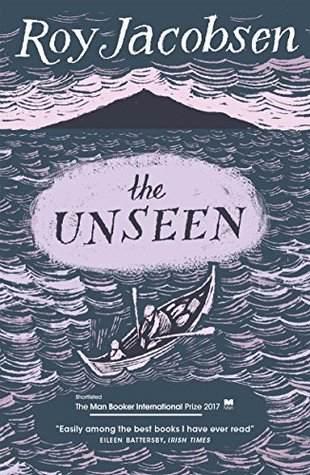
Review 2116: The Unseen

I have to admit to buying The Unseen because of its cover. I’m glad I did, because before I was halfway through, I was ordering the second book in the Barrøy trilogy. Although I’m not reading the shortlist for the Booker International prize, this novel was shortlisted for it.

After reading much of Halldor Laxson’s Independent People under the belief that it was describing Icelandic life in Medieval times, only to find out it was set in the 20th century, I don’t make assumptions about the times in which novels are set anymore. The Unseen describes a similarly primitive existence, with not many hints to its timeframe, but I finally figured out it begins a few years before World War I.

Ingrid’s family lives on Barrøy, one in an archipelago of many small islands in northern Norway. Each island is occupied by one family, and although the islands are in sight of each other, visits are rare, so the family has to be fairly self-sufficient.

Ingrid’s father, Hans, works hard and dreams of a different life for his family. His immediate dream is for a quay to make it easier for boats to land, so that when Uncle Erling arrives with his large fishing boat each January to pick up Hans for the yearly fishing, he can get off the boat. The novel relates the everyday events of the family’s life—the four-month fishing trips, the haying and fish drying in summer, milking cows, moving livestock from one small island to another for grazing, collecting and cleaning down from the eider ducks. And the big events—births, deaths, expansions and contractions of the residents of the islands.

Written in spare, crystalline prose with an occasionally very dry humor, The Unseen is fascinating. I loved this novel. And here I am reading about islands again.

Related Posts

Independent People

A Place Called Winter

The Rathbones