Review 1465: Sugar Money

Best of Ten!
In 1765 Martinique, Father Cléophas sends two of the monks’ slaves, Emile and Lucien, on an astoundingly ill-advised mission to Grenada. The two brothers are to gather the monks’ hospital and field slaves from the island, which has been taken by the British, and bring them to Martinique. Cléophas presents them with a notarized document and tries to convince them that the British have agreed to this, but in the next breath, he tells them to do it secretly, on Christmas Day, when the British will be drunk.

Emile, who is 28, tries to convince Cléophas to leave Lucien, who is 13, home, but Cléophas insists that Lucien go, because he can speak English. Then he gives them a package of medicinal herbs to convey to a doctor, their excuse for going to the island.

The slaves have no choice but to do as they are bidden. Lucien relates this story in his quirky mix of English, French, and patois. In the guise of an adventure, with humor and a likable, inimitable narrator, Jane Harris tells us the horrifying details of life in the 18th century Caribbean.

This is an excellent novel that I read for my Walter Scott Prize project. I have recently read more than one novel set on a Caribbean sugar plantation, but this one seems the most authentic.
Related Posts

Washington Black

The Quality of Mercy

The Long Song

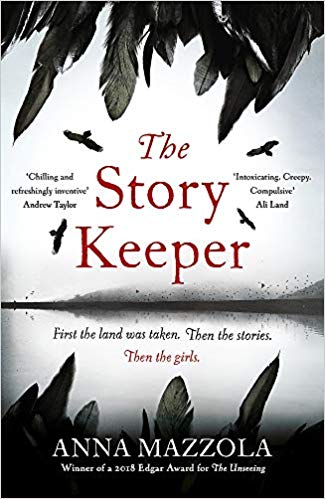
Review 1460: The Story Keeper

Audrey Hart arrives on the Isle of Skye to take up a position as an assistant to a folklorist in 1857. She has fled her family because of a situation that occurred during her volunteer work and because her father doesn’t believe a girl of her upbringing should work. She has taken a job on Skye because her mother, who died when she was a child, loved it there.

Upon her arrival in Skye, Audrey notices a croft girl who appears to be ill. The local people believe she was taken by fairies. The Buchanans, her employers, aren’t interested in what happens to a girl of her class. The minister thinks even Miss Buchanan’s story-collecting activities encourage superstition.

Audrey is worried, because she hasn’t been able to get the locals to tell her any stories so can’t do her job. But then she begins hearing about other young girls who have disappeared. No one seems to want to listen to her ideas that the disappearances may be related, not even the kind nephew of Miss Buchanan, Alec. While all this is going on, Alec’s father is enclosing his land and evicting tenants.

This is an atmospheric novel that nicely blends the folklore of the area with more sinister themes. Although I almost immediately figured out what was going on, if not the motive, I enjoyed the journey. This is an entertaining historical suspense novel.

Related Posts

The Good People

The Sea House

At the Water’s Edge

Review 1457: The Alice Network

I would estimate that 90% of the recent historical novels I’ve read in the last two years—and I’ve read a lot of them—are dual timeframe novels. Although I have read some excellent ones (The Weight of Ink comes to mind), I’m beginning to feel that they often indicate laziness on the author’s part. Why write a carefully researched novel about one period when you can write two hastily researched ones?

In post-World War II England, Charlie is on her way to Switzerland to a clinic for unmarried pregnant women when she ditches her mother to try to search out what became of her cousin Rose during the war. This all sounds very well, but the flippant first-person narrative style undermines everything serious about this section, turning it into, well, a historical romance.

She finds Eve, whose name as a preparer was on the reports her father received about Rose. And what are the odds that Eve is going to handle a report that mentions a name important to both her and Rose’s fates? Not too likely, I’m guessing, but that’s what happens.

In any case, then we plunge into the story of Eve, a spy during World War I, and back and forth we go for a book that is about 100 pages longer than it should be and very repetitive.

Worse, some of the detail and conversations, especially in the spy section, seem unlikely. I felt as if the characters were being put through their paces in benefit of the plot rather than evolving more organically. Characters are given traits to round them out, but these traits are just sort of thrown into the mix. For example, Charlie is supposedly a math whiz, but the most complicated thing she does is figure a tip or quote the Pythagorean Theorum (which I learned in 7th grade, and I think kids learn even earlier now). Neither is exactly high mathematics.

I know this book was very popular, and I think the subject matter is interesting, but I am not a fan of the execution of this novel. I wasn’t that drawn in by Manhattan Beach, but compared to this and some of the other World War II-based novels I’ve read lately, it was a masterpiece.

Related Posts

Lilac Girls

Salt to the Sea

Manhattan Beach

Review 1455: City of Girls

So far, it’s hard to predict what Elizabeth Gilbert will write from one novel to the next. I read Eat, Pray, Love reluctantly, because it was so popular and I resisted reading a memoir by someone so young. But I loved it for its style and humor. The Signature of All Things was an enthralling 19th century story about the life of an unusual woman.

In City of Girls, Gilbert re-creates 20th century Manhattan, beginning in 1940. Vivian Morris is a heedless Vassar dropout with no idea what she wants to do and no inclination to do anything. Her status-conscious parents finally ship her off to her Aunt Peg in New York. Peg is the owner of a crumbling old theater in Hell’s Kitchen that puts on brainless entertainment for working class clientele.

Vivian begins a life of drunken nights running around town with the theater’s chorus girls and sleeping with just about anyone and days making costumes for the shows. For Vivian’s talent is sewing.

In the four-story building where the theater is located live Aunt Peg and her partner Olive as well as a motley crew of chorus girls, musicians, and others from the shows. Vivian is delighted to be given the apartment of Aunt Peg’s husband, the debonair Billy Buell, who hasn’t lived there in years. But things change after Peg offers a home to the famous British actress, Edna Parker Watson, whose home was destroyed in the Blitz. Peg decides to stage a good production for Edna, and Billy arrives to help write it.

The show is a success, but shortly thereafter, Vivian takes a fall because of her own foolishness. She ends up returning to her parents’ home in disgrace.

So far, the book was of a piece, even if I didn’t find Vivian a particularly interesting or sympathetic character. But that’s just the first half of the book. During the second half, when a wiser Vivian returns to New York to help out her aunt during the war and proceeding for the next 30 years, I began to wonder what the heck the book was about. It just seems to meander around a lot before coming to an admittedly poignant point.

The conceit employed by the novel is that the entire long novel is a letter to a woman answering her long-ago question of how Vivian knew her father. I think this first-person narrative is a weakness, because I can’t imagine someone writing some of this stuff to anyone, let alone a near stranger. Further, the second half of the novel seems like a different, less purposeful book.

It sounds like I disliked this book. I didn’t, I just feel it has problems, and I never warmed to Vivian.

Related Posts

The Signature of All Things

Lucky Us

Manhattan Beach

Review 1428: The Children’s Book

I have an inconsistent reaction to Byatt. I find her novels either completely absorbing, as I did Possession, or perplexing, as I did A Whistling Woman. The very long novel, The Children’s Book, nevertheless falls into the first category.

Byatt’s novel takes on the late Victorian and early Edwardian periods, a time when, she says, adults seemed to be trying to prolong childhood, when, for example, Peter Pan made its appearance. Fittingly then, a major character is Olive Wellwood, a writer of children’s tales. She has many children, and aside from her authorly output, she writes a continuing story for each one of them. It’s her oldest son, Tom’s, misfortune that she confuses fiction with reality.

The novel begins when, on a visit to a museum with his mother, Tom notices a ragged boy and follows him to find he is living in a closet in the museum. This boy is Philip Warren, a worker in a pottery factory who has run away because he wants to make pottery, not feed fires and do other mundane tasks. Major Prosper Cain, the museum keeper Olive is visiting to consult, thinks he may be able to find a place for Philip, and Philip ends up working at Prospect House for the brilliant but disturbed potter Benedict Fludd.

But first we have the Wellwood’s elaborate Midsummer play, where we meet all of the important characters of the novel. The Wellwood’s guests are artists, anarchists, socialists, fellow Fabianists, and even a banker in the person of Basil Wellwood, the host Humphry’s brother. Of course, other guests are these people’s children, who eventually become important characters in their own right.

The novel covers the time from 1895 to the end of World War I, although the war is covered only briefly. Over this time period, Byatt not only tells us the stories of her many characters but also checks in to events in the lives of actual figures of the time, for example, Oscar Wilde, Emma Pankhurst, H. G. Wells, and Rupert Brooke.

This novel is interesting both on an intimate level, as the children discover their parents’ secrets and have their own, and on the broader, more ambitious level of a portrait of the age. There are casualties in this novel, and it is at times very dark, the way Olive likes her stories.

Related Posts

A Whistling Woman

C

Mrs. Engels

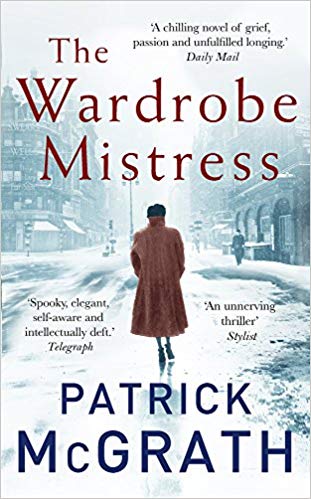
Review 1426: The Wardrobe Mistress

In post-World War II London during a cold winter, the famous actor Charlie Grice, called Gricey, has died. His widow, Joan, a wardrobe mistress, is bereft. When a young actor, Daniel Francis, takes over Gricey’s role as Malvolio and plays it exactly the same, Joan comes to believe that he has become Gricey.

As Joan is beginning to befriend Daniel Francis, or Frank Stone, his real name, she makes a horrible discovery about Gricey. Behind the lapel of one of his coats she finds a badge, the emblem of Britain’s fascist party. This is doubly horrible because Joan is Jewish. Asking around discreetly, she finds what everyone else knows—Gricey was indeed a fascist.

The stress on Joan becomes even worse as her friend Frank begins working with her daughter Vera on The Duchess of Malfi. Vera’s husband and his friend Gustl ask her to help them fight the fascists by infiltrating them.

This novel is written from an omniscient viewpoint with a first person plural accompaniment by the ladies of the chorus. This technique lends it a certain ironic tone. It’s a creepy and atmospheric novel that chills to the bone.

I read this novel for my Walter Scott Prize project.

Related Posts

Munich

Midnight in Europe

The Spoilt City

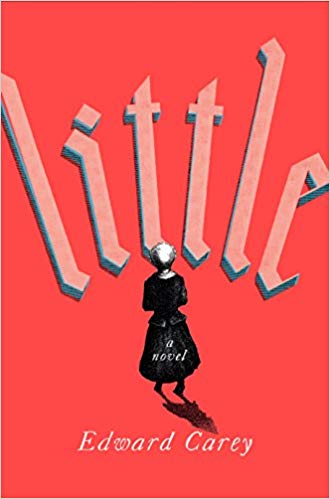
Review 1424: Little

Best of Ten!
Often I don’t read reviews attentively or more often I don’t remind myself what a book is about before reading it, so I didn’t realize for some time that Little is a fictional biography of Madame Tussaud. It is an idiosyncratic one, to be sure.

Marie, often called Little for her small stature, is familiar with loss. In 1760, when she is five, her father dies. Her mother never recovers from it, and shortly after she and her mother take up residence with Doctor Curtius, for whom her mother is employed as a servant, her mother commits suicide.

Doctor Curtius is one of many peculiar characters, Marie not excepted, who occupy the novel’s pages. He is a very odd creature, unused to others, who models body parts in wax to be studied by anatomists. Marie is not dismayed by his peculiarities and is entranced by his wonderful collection of body parts. So, he begins teaching her to draw and model objects in wax.

At Little’s suggestion, they model the entire head of some subjects. Soon, they have a business of selling heads of themselves to customers. Dr. Curtius is mistreated by the hospital, so when a traveling Frenchman, Louis-Sébastian Mercier, suggests they move to Paris from Switzerland to model great men, they do.

Shortly after they arrive in Paris, Doctor Curtius falls under the influence of their landlady, the Widow Picot, who soon has Little working for the entire family, not just Doctor Curtius, even though Little has never been paid. Madame Picot makes no secret that she would like to get rid of her. In the meantime, she and Doctor Curtius begin by modelling the heads of famous criminals. By now, the French Revolution threatens.

Little is narrated in a sprightly, whimsical fashion even when it relates things that are not so pleasant. That, and the pervading personality of its main character, are two of its charms, even as it becomes darker. This is a strange and wonderful novel.

Related Posts

The Fountain of St. James Court or, Portrait of the Artist as an Old Woman

Birdcage Walk

A Tale of Two Cities

Review 1418: Sister Noon

I found the first two books I read by Karen Joy Fowler slight, but then she blew me away with We Are All Completely Beside Ourselves. So, I thought I’d give Sister Noon a chance.

In 1890’s San Francisco, Lizzie Hayes is a spinster who spends her time doing good works. In particular, she is treasurer for the Ladies Relief and Protection Society, or the Brown Ark, a home that takes in orphaned children or children whose parents can’t keep them. To Lizzie comes the notorious Mary Ellen Pleasant, a woman about whom there are many rumors. She brings Lizzie a child, Jenny Hijab, who needs shelter.

After Lizzy calls on Mrs. Pleasant in the House of Mystery to report on Jenny, her friends go to great lengths to warn her about the acquaintance. Lizzy is fascinated by this household, where Mrs. Pleasant seems to be in charge of Mrs. Bell’s house even though Mr. Bell was previously her lover, and Mr. Bell is never present. Mrs. Bell has told her some bizarre stories but not more bizarre than the ones she’s already heard. Actually, although Lizzie is not inclined to pursue the acquaintance, she finds there are things she needs to know.

This novel moves back and forth in time to tell its stories about the wild days of early San Francisco, but this doesn’t help with the lack of focus I felt when reading the book. I found myself losing patience as it slowly meandered to its point. It finally begins getting somewhere about 20 pages from the end. Normally, a book that develops slowly doesn’t bother me, but this one made me impatient. I think this was because I wasn’t that interested in the characters.

Related Posts

We Are All Completely Beside Ourselves

The Jane Austen Book Club

Wit’s End

Review 1417: The Web of Days

I think it is interesting to reread a book I read long ago to see if or how my reaction to it has changed. This can work both ways—I can appreciate a book I disliked the first time or see the flaws in a book I loved. I remember reading the gothic romance The Web of Days when I was a teenager, borrowed from a neighbor’s house for whom I was babysitting. After the kids went to bed, I would pull it out for the next installment. I liked the book and had a crush on its romantic hero. So, what did I think this time? More about that later.

Hester Snow arrives from the North at Seven Chimneys, a ruined plantation on one of the sea islands of Georgia just after the Civil War. She is to be a governess for Rupert LeGrand, the son of the owner of the plantation, Saint Clair LeGrand. At the house she finds an indifferent master; his mother Madame, who cares only for her food; and his wife Lorelei, who drinks too much. The house is slovenly, the fields are ruined, and the servants are insolent.

Hester believes that with hard work and oversight, Seven Chimneys could be made profitable again, and she soon seeks permission from LeGrand to see to it. When she begins to find herself successful, she becomes obsessed with seeing the plantation thrive and making a home for herself. What she doesn’t see is the truth behind the relationships between the family members at Seven Chimneys.

She is attracted to Roi, Saint’s dashing bastard half brother, but he offers a life in a cabin in Missouri. Hester thinks that will be a harsh life of drudgery and wants nothing to do with it.

First of all, this novel is so racist it took my breath away. It’s hard to tell if Lee was trying to depict the time as it was or was racist herself. However, Hester herself is racist. Even though she comes to like a couple of the African-American characters, she treats more than one of them despicably, and they are all stereotypical.

Second, in other ways Hester is not at all likable, being so obsessed with succeeding on the plantation and feeling herself so superior to the southern characters. In many ways, except for not being evil, she reminds me of the main character in one of Philippa Gregory’s early series, Wideacre. She acts fairly reprehensibly up to the very end of the novel, when she has a change of heart. Frankly, she does not deserve her happy ending.

Did I like the book? It is well written and atmospheric. It has some suspenseful scenes, and Hester finds herself in a corner. But no, not only is the racism too much for me, but the regionalism is, too, because Lee depicts most southerners as loafing crackers (she even uses the word), greedy vulgar businessmen, or effete, elitist aristocrats. This is not at all the book I remembered reading.

Related Posts

Varina

Days Without End

This Godforsaken Place

Review 1414: Lilac Girls

I would like to say to some writers, If you are going to use multiple narrators (please don’t), they must have their own voices. If they don’t sound like different people, this technique doesn’t work. Unfortunately, either Martha Hall Kelly doesn’t know this or can’t do it. I’m not talking about expressed concerns or interests here but actual tone and mode of expression.

Lilac Girls reminds me very much of Salt to the Sea. If you remember my review of that book, you know that’s not a good thing. There’s the World War II setting, the alternating chapters with different narrators, one of whom is the evil Nazi. There is also the unconvincing narrative change, the poor characterization, and the mediocre writing.

Caroline Ferriday is a New York socialite who works for the French Consulate and is involved in charities to help French children. In summer of 1939, there are already lots of refugees fleeing from France. We guess she’s going to become involved in that; however, the first hundred pages of the novel concern her growing relationship with Paul Rodierre, an actor whose wife is trapped in France. Not very interesting, since Hall doesn’t get us to care about Caroline or Paul.

Kasia Kuzmerick is a Polish teenager living in Lublin. When the Nazi attack, she witnesses their planes firing on camps of refugees. Later on, she begins running errands for the resistance.

Herta Oberhauser is a young doctor who has bought the Nazi vision despite having difficulty getting a job because women are expected to be wives and mothers. She finally gets a job working at Ravensbrück, a concentration camp for women.

Not only did I think the characterization was poor, I felt the behavior of characters was at times unlikely. For example, Kasia is old enough to understand that her mother is being forced to have an affair with a Nazi, yet she makes a dangerous public scene with her about it. Herta is an ambitious doctor who cannot find a job because she is a woman, yet she buys the ideals of the Nazi party that is keeping her down.

I admit I did not finish this novel, which was taking a long time to get anywhere (another problem with such frequent switches in narration). I read about a quarter of the book then decided to quit wasting my time. The story of Ravensbrück is important, but this writer is not up to the task.

Related Posts

Salt to the Sea

All the Light We Cannot See

The Nightingale