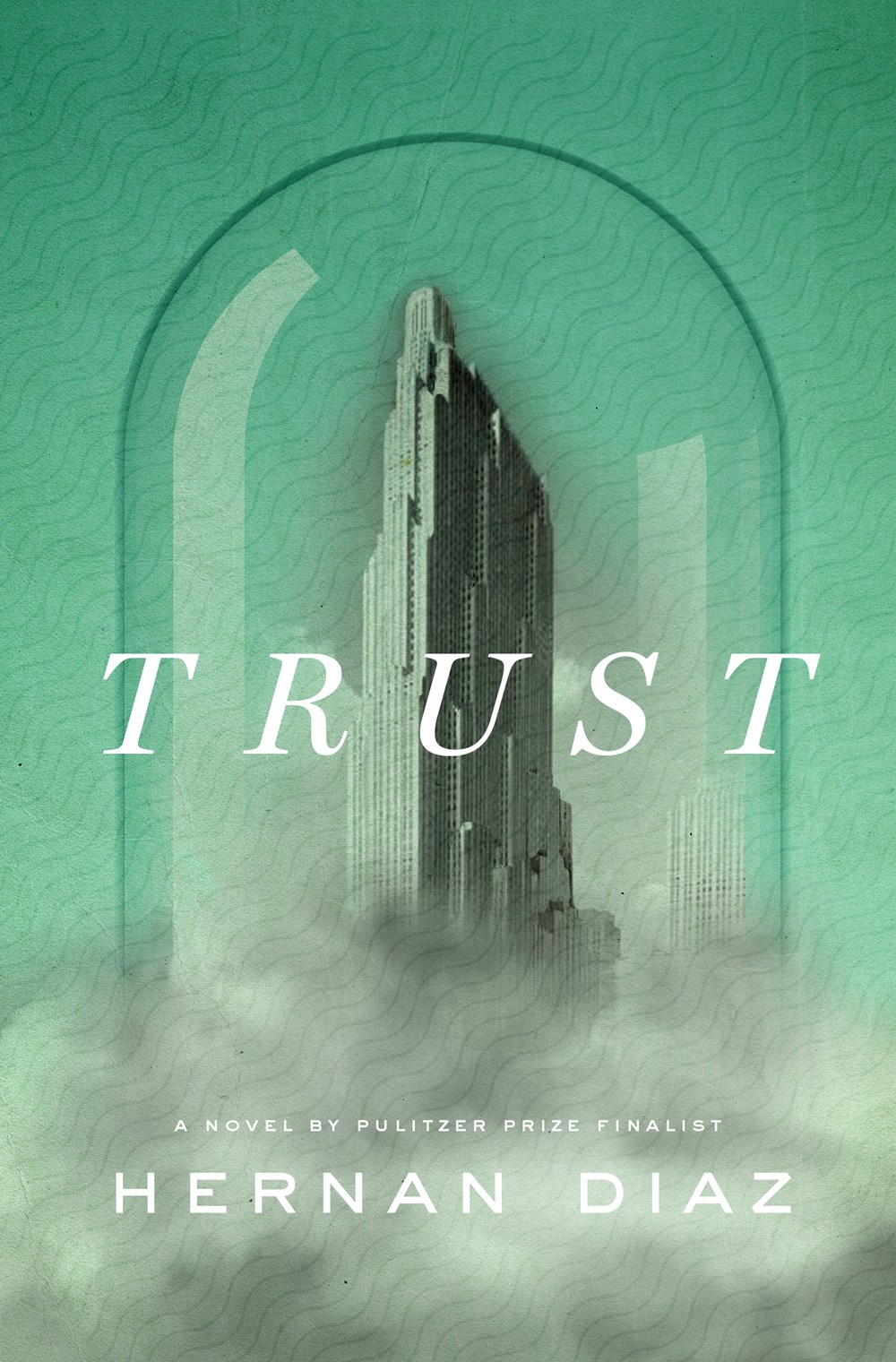
Review 2319: Trust

Trust is like a stack of nesting dolls. It is the story of a fabulously wealthy couple set in New York of the 1920s and 30s. First, it is written in the form of a novel published in 1937, Bonds by Harold Vanner, in which the couple are called Benjamin and Helen Rask. While the husband makes money, the wife is a patroness of the arts who dies in an insane asylum.

The second section of the novel consists of chapters and notes from Andrew Bevel’s unfinished “autobiography.” Bevel is the actual tycoon depicted in Bonds, and his biography reveals a controlling and almost megalomaniacal personality. In this section, the biggest difference is how unequal the couple are, with Mildred Bevel being treated as the little wife who has the harmless hobby of loving music and encouraging a few musicians. There are also sections about what a financial genius the husband is. This section was so overbearing that I could barely stand to read it.

Patience is needed for this novel, because more is revealed at each level. In the third section, we meet Ida Partenza, the ghost writer of Bevel’s biography. Her narrative is split between two time frames, the “present” of 1985 in which she is an older lady who has just heard of Mildred Bevel’s papers being available for study at Bevel House, and her memoir of working with Bevel on his book as a 20-year-old woman just after World War II. Bevel’s main concern seems to be to refute the novel Bonds, especially in regard to how it depicts his wife, and it’s true that it depicts her as dying in an insane asylum instead of a health clinic. However, to Ida’s confusion, instead of sharing with her memories of his wife or letting her interview Mildred’s friends, he seems to want her to invent things. It is in this section that the novel begins to be really interesting. Who was Mildred Bevel? What are Bevel’s secrets?

The final section is Mildred Bevel’s journal, brief passages written when she was dying in Switzerland.

This is the kind of novel that unfolds more in each succeeding section. It is about money, power, and control but especially about control. It is like glimpsing an image in a sliver of mirror that reflects differently as it moves.

I read this novel for my Pulitzer project. Trust was a cowinner for 2023 with Demon Copperhead.

Related Posts

The Wife

Empty Mansions

The Blazing World

Review 2307: The Geometer Lobachevsky

In 1950 Ireland, Soviet citizen Nikolai Lobachevsky has been working in the western bogs, trying to help a team survey the bog lands. He receives a letter from the Soviet government summoning him home to take up a “special assignment.” He knows that probably means execution, so he hides on a remote estuarial island.

Readers who look for a rousing plot aren’t going to find one here. Nothing much happens except for work and exact observations. First, Nikolai is helping with the surveying. Later, he helps farm seaweed. But he is homesick, and once he hears of Stalin’s death, he decides to return to Russia, taking a gamble that Malinkov, for whom he used to work, will pardon him for whatever sins he’s supposed to have committed.

I just felt meh about this novel, which I read for my Walter Scott project. It excels at descriptive passages, but it was hard to know Lobachevsky. Also, I am not that into strictly contemplative novels.

Related Posts

The Fawn

The Bogman

The Secret Guests

Review 2306: The Midnight News

Is The Midnight News a love story? a murder mystery? an espionage tale? a story about a dysfunctional family? an exploration of how the stress of war affects people psychologically? I’m not telling.

Charlotte is the daughter of privilege. Her father is a peer and a member of Parliament with an important war job. But Charlotte has chosen to work as a typist in a government office and live in a respectable but middle class boarding house.

It is the Blitz, and Charlotte’s home is in a dangerous area south of the Thames. She and the other residents of the house have been spending their nights on the lowest level of the house.

The novel starts slowly. Charlotte spends a day with her best friend, El, who has been elusive lately. Then El is killed in the Blitz. Charlotte goes to visit her godmother, Saskia, after she hears that a well-known actress, a schoolmate, has also been killed. Then Saskia dies, too. Charlotte has noticed a square gray man in several different places and comes to believe he is following her and killing people she is close to. This may seem like a wild idea, and since Charlotte has begun hearing the voices of her dead friends and has a history of mental illness, we begin to worry about her.

Then there is Tom, the son of an undertaker whom Charlotte has noticed feeding the birds. He is waiting to hear about a scholarship and a place at King’s College, but notifications are delayed because King’s has been hit in the Blitz. He is in love with Charlotte but thinks she is above him.

Is Charlotte being followed or is she paranoid? Is there something else going on? This novel eventually because a fast-moving, tightly plotted, and satisfying tale.

Related Posts

The Body Lies

A Country Road, A Tree

Longbourn

Review 2298: Libertie

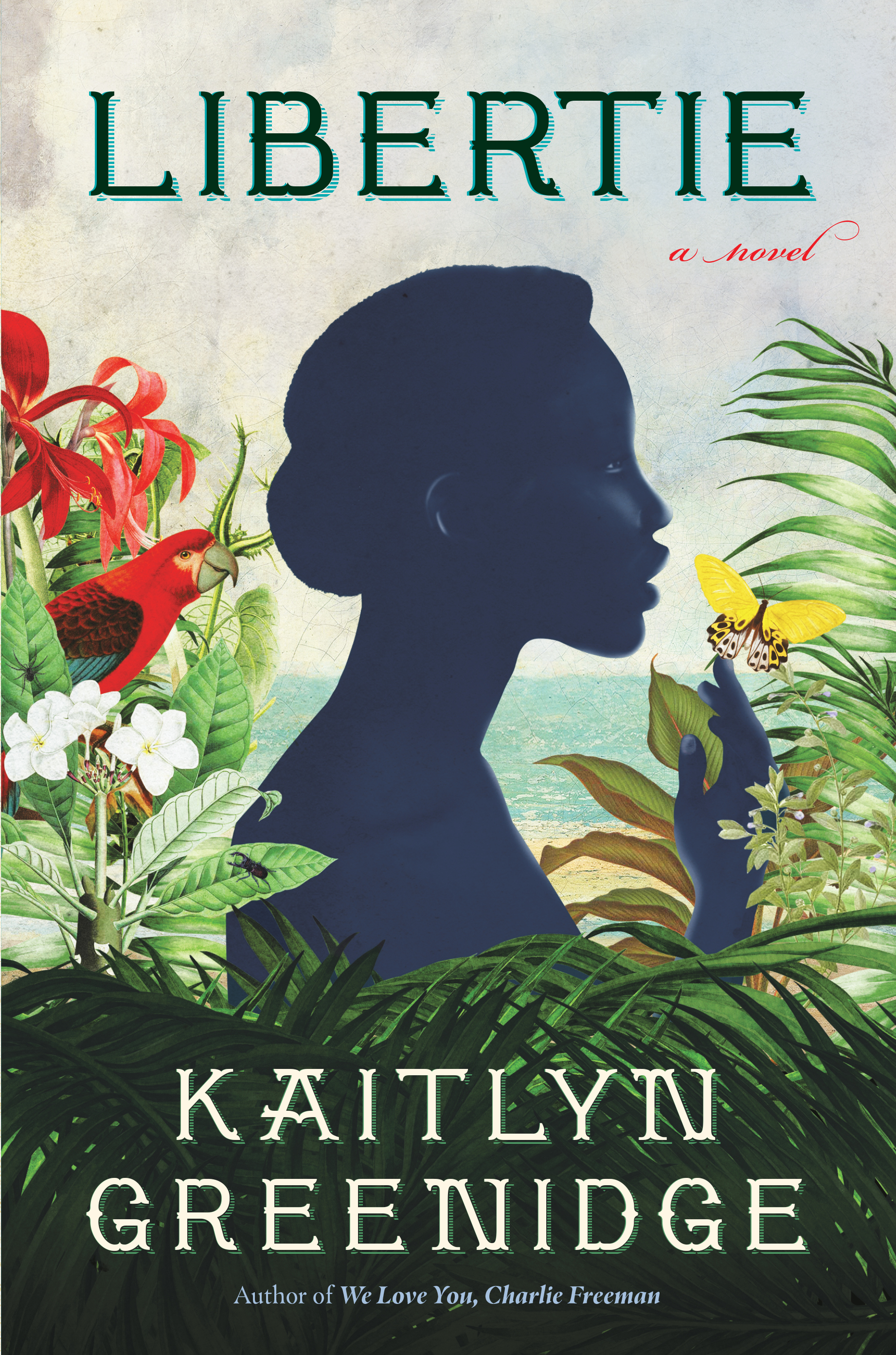
Libertie is an African-American girl growing up in pre-Civil War Brooklyn. Her mother, Mrs. Sampson, practices as a homeopath and has been training Libertie in the use of plants. Her great desire is for Libertie to study medicine and become the first African-American woman doctor.

But Libertie seems to be a person who only knows what she doesn’t want. She doesn’t want to study medicine, but her mother arranges a course of study for her at a college in Ohio for African-American students, without consulting her. She is the only girl in the science department. There she decides to punish her mother for sending her away by neglecting her studies. She spends her time trying to figure out how to fit in with one group or another and finally settles on girls nicknamed the Graces, two women with beautiful singing voices.

The novel is mostly concerned with the relationship between the two women—the mother constantly pushing, disapproving, eaten up with ambition for her daughter but with no regard for what her daughter wants, the daughter seeking approval but rebelling at the same time, with no ambitions for her own life. This relationship becomes even more difficult when Libertie comes home after a year at college, lying about her results, and meets Emmanuel Chase, her mother’s protégé from Haiti.

I was uncomfortable with this book, I think, partly because of its first-person point of view. I don’t like historical fiction that makes its heroines modern, and there is nothing 19th century about Libertie’s narrative, especially when it comes to sex. But even more than that, it didn’t help that neither Libertie nor her mother is a particularly appealing character or that all of Libertie’s life decisions are poor ones. A 21st century young person might fritter away the opportunity that her mother is struggling to provide her, for example, but I can’t imagine a 19th century one, with her knowledge of what her people have been through, would. Libertie behaves more like a spoiled 21st century child than someone who in the 19th century would be considered a young woman.

Finally, Greenidge says this novel was inspired by the first African-American woman doctor in the States, but I kept wondering who it was meant to be. Mrs. Sampson herself is not a qualified doctor, and Libertie purposefully sabotages her opportunity in pre-med.

I read this novel for my James Tait Black project.

Related Posts

The Underground Railroad

Beloved

Washington Black

Review 2297: Killingly

Killingly is loosely based on the true story of a student’s disappearance from Mount Holyoke College in 1847.

Bertha Mallish has vanished, but the readers realize that her best friend Agnes Sullivan seems to know something about it. The river has been dragged, but no trace of Bertha can be found.

Bertha and Agnes are the campus misfits. They are hard workers who don’t socialize and are from poor families. However, the last few months they have become very close.

Dr. Hammond, who had been courting Bertha, has arrived at the college with Reverend Mallish, Bertha’s elderly grandfather, and Florence, her much older sister. Florence and Agnes don’t like Dr. Hammond, who quickly develops an obsession about the case, hires a private detective, and behaves as though he’s in charge of the investigation. He becomes suspicious of Agnes.

Beutner is very skillful in how she slowly unfolds the story and reveals what happened to Bertha. She draws you in to a story that is sometimes affecting, sometimes suspenseful. The novel is involving, and I look forward to reading more by Beutner.

Related Posts

Alias Grace

Stone’s Fall

The Shape of Darkness

Review 2295: Frederica

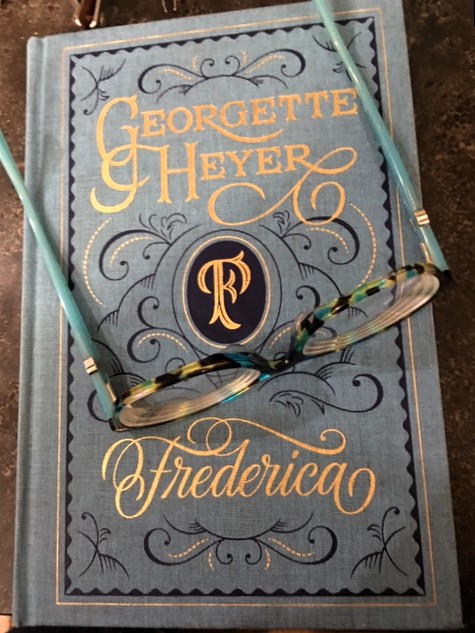
I didn’t set out to reread Frederica, but the Folio Society just brought out a couple of beautiful editions of some of Heyer’s books, so I had to buy them. My original review is here, but I thought I’d talk about some things that struck me this time around.

Heyer has a great sense of humor, and I was tickled by the situation that brings about the climax of the book. Frederica has spent a good deal of ill-afforded money and enlisted Lord Alverstoke’s help with the aim of making a good match for her beautiful but dim-witted sister, Charis. Unfortunately, Charis has fallen in love with Endymion Dauntry, Alverstoke’s handsome but stupid heir. Frederica is skeptical of Charis’s affections because she has fallen in love many times before. Endymion has convinced himself that Alverstoke would prevent the match by having him sent on a mission. Not only does Alverstoke have no power to do so, but he doesn’t really care who Endymion marries. He thinks Endymion isn’t serious because he hasn’t consulted him about getting married.

The incident with the dog in the park

Endymion is friends with Harry, Charis’s and Frederica’s brother, and the two have been confiding their star-crossed misfortunes to him. Frederica makes him angry for some trivial reason, and he suddenly realizes he is Charis’s guardian. So, the three of them stage a totally unnecessary runaway marriage.

Felix and Jessamy, Frederica’s young brothers, are especially delightful characters. Heyer is an amusing writer and a master of silly situations such as the one that Charis and Endymion create for themselves.

Related Posts

The Corinthian

The Grand Sophy

Arabella

Review 2288: Arabella

Merry Christmas, everyone! Here’s a romp for Christmas Day.

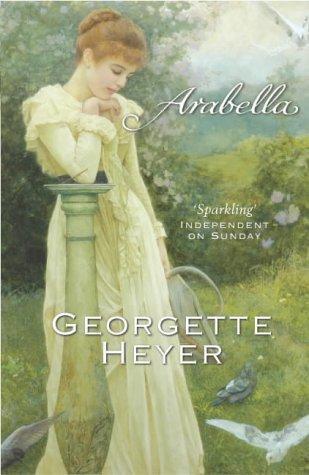
The vicarage children are excited to learn whether their mother’s best friend will invite their sister Arabella for a season in London, in the hopes she can make an eligible match. The invitation arrives from Lady Bridlington, and then the worry is that the upright Reverend Tallant will not allow her to go.

Soon Arabella is on her way to London from Yorkshire. But the perch of her uncle’s old carriage breaks, and she sees nothing wrong with going to the nearest house for shelter. Unfortunately, it is the hunting box of Robert Beaumarais, a leading figure in society and a very wealthy man, who assumes she is one of many girls trying to make his acquaintance. When she hears him saying this to his friend Lord Fleetwood, she says she is the rich Arabella Tallant, who hoped to be unrecognized in London.

Beaumarais sees through this lie but maliciously lets the indiscreet Lord Fleetwood think he knows about her. He also decides to make her debut a sensation. Soon, Arabella is a success but doesn’t dare accept anyone’s proposal because she realizes that they all think she is rich, whereas she has no money at all.

Although she is in an awkward position, she is enjoying herself. But then her brother Bertram, who is supposed to be at Oxford, arrives and begins to get himself into financial difficulties. To make things worse, Arabella has begun to realize she cares for Beaumarais and is afraid to admit her deceit.

Arabella is an adorable heroine, and Beaumarais a likable hero, as he fondly watches her dig herself deeper into trouble, hoping she will confide in him. Heyer is at her best and funniest with these absurd plots.

Related Posts

Cotillion

Frederica

Friday’s Child

Review 2287: In the Country of Others

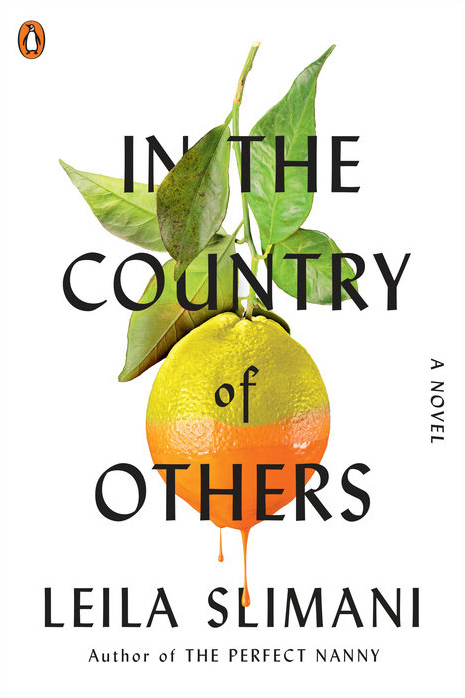
In the Country of Others tells the fictionalized story of Slimani’s own grandparents during a time of turmoil. During World War II, Amine Belhaj is a Moroccan soldier stationed in the Alsacian region of France. There he meets and marries his French wife Mathilde, and after the war, they go to live in Meknes, Morocco.

Mathilde finds it difficult to adjust to Moroccan life, especially once they move 15 miles out of town to live on the land Amine’s father bought and that he has dreamed of cultivating. Mathilde struggles to fight the total loss of power expected of an Arab wife. Amine can sometimes be physically abusive. Also, he works hard and spends all his time and money on the orchards. Mathilde would like to go into town and have some fun sometime. As what is considered a mixed-race couple, they are mocked on the street.

The narrative shifts mostly to her daughter Aïcha when she is a young girl starting school. Her parents send her to a Catholic school where she is mocked by her French schoolmates. She hates her kinky hair and is terrified when her parents leave her at school the first day.

As it gets into the 50s, the Moroccans move closer to war when France ignores their desire for independence. French people and homes are attacked.

This is a novel about sex and power. Although Mathilda doesn’t want Aïcha to be raised as a submissive woman, she finds herself forcing her sister-in-law Selma into marriage with an old man when Selma is deserted by her young French lover. It is also about power in terms of who will control the country.

It is an interesting story that’s told in a dispassionate way, keeping me from totally identifying with any of the characters. It’s clear toward the end that Aïcha is identifying with the native Moroccans rather than the French, even though she is half and half, but Slimani herself doesn’t seem to take any sides, either in war or in sexual politics, even though she clearly wants more for Moroccan women.

Related Posts

The Happy Marriage

Song of a Captive Bird

The Parisian

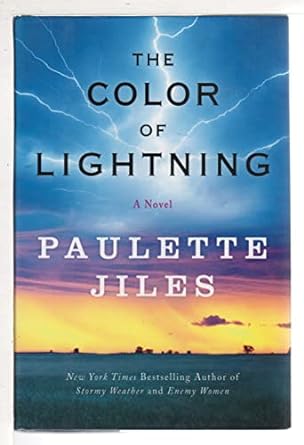
Review 2285: The Color of Lightning

I have read several of Paulette Jiles’s books that are set in post-Civil War Texas and depict a countryside that’s dangerous and beautiful at the same time. Another characteristic of these books is that they feature brief appearances by the main characters of her other books. I believe that The Color of Lightning is the first of these books. Unlike the others, though, it is about a person who really existed.

Britt Johnson is a black freedman who travels with his wife and children along with his ex-master and a group of fellow Kentuckians to Texas to get away from the war in 1863. They all live in a small community called Elm Creek in Young County, Texas, at the edge of the area occupied by settlers. Although they are living in the traditional raiding lands of the Kiowa and the Comanche, the older residents of the settlement say they haven’t seen a native since they moved there.

Britt has been rounding up cattle, but his real ambition is to buy teams of horses and freight wagons so he can start a freight service for the area. While the men of the settlement are on a trip to Weatherford to get supplies, a force of 700 Kiowa and Comanche attack the white and black settlers of Young County. Britt’s oldest son Jim is killed and his wife Mary and children Cherry and Jube are captured. Elizabeth Fitzgerald’s daughter Susan is killed, and Elizabeth and her granddaughter Minnie are taken.

The United States government has removed its corrupt Indian agents from Indian Territory and for a few years makes an experiment of turning the various reservations over to the administration of religious organizations. Samuel Hammond is a Quaker who reluctantly agrees to take over the Kiowa-Comanche reservation. He hopes to manage the reservation without using force or violence, but he goes to work with no understanding of these native peoples, trying to contain them on the reservation when they have always been wanderers, stop the raiding (which he didn’t even know about when he took the job), and make the natives into farmers when they consider that women’s work.

In the meantime, Britt begins a long trip north to the winter territory of the Kiowa and Comanche to trade for his wife and children. He is given unexpected help from a young Comanche brave named Tissoyo whom he befriends on his trip. While he’s on his way, the story shifts to the lives of Mary, Cherry, and Jube in the Kiowa camp.

I think this novel did a really good job of representing the viewpoints of all of its characters—the settlers, the native people, the captives, and the Indian agency administrator. The novel is exciting at times and deeply interesting. Jiles is getting to be one of my favorite writers.

Related Posts

Simon the Fiddler

News of the World

The Son

Review 2280: The Vaster Wilds

I don’t know very much about the Jamestown colony, but apparently it nearly failed because of illness and starvation. In Lauren Groff’s latest novel, a servant girl steals some supplies and flees the colony, knowing she is being pursued. She vaguely knows she can head north to French territory or south to Spanish territory without really understanding the distances involved. She heads north.

The novel follows the girl’s grueling journey through the wilderness while occasionally revisiting her past, leading up to the reason she is being pursued. This account is gripping at times as she encounters various hazards and tries to find food. Occasionally, the novel also describes her nightmares and less lucid moments.

Groff’s writing is superb, and I was right there with her until the later pages, which enter a more metaphysical realm. I don’t find that kind of thing interesting, and it occupies most of the last 20 pages.

Related Posts

Arcadia

Fates and Furies

The Lost Book of Eleanor Dare