Review 2233: News of the World

Shortly after the Civil War, Captain Kidd, 72-year-old veteran of three wars, rides around Texas reading the news in small towns. He was previously the owner of a print shop in San Antonio, but during the war, the Confederate government forced him to invest in their government bonds, so he ended up bankrupt.

Most of Texas is very dangerous, prone to raids by Native warriors and lawless. He is in Wichita Falls when a freight driver he knows asks him to take a girl—who was captured by the Kiowa four years earlier and has now been returned under threat—to her relatives near San Antonio. The driver has found her hard to control and has no freight to take to San Antonio. The Captain reluctantly agrees.

The girl, kidnapped from German immigrants, is named Johanna and is going to her aunt and uncle. However, she remembers nothing of her previous existence and is wild about being taken from the Kiowa.

The Captain and Johanna come to understand each other on this dangerous, difficult journey of around 400 miles. They have to cope with floods and such dangers as an attack by three men who want Johanna for a prostitution ring.

I had already seen the excellent movie starring Tom Hanks, but News of the World is even more involving. I was interested to re-encounter Simon the Fiddler, who is the main character of Jiles’s most recent book. Having looked at some of her other books, I see that she has set several of them in the same area and time, with characters who make brief appearances in each other’s novels.

I just loved this book. Jiles has created two unforgettable characters, and the novel is ultimately powerful and heart-warming. Descriptions of the land are lyrical, from its harsh aridity to its lushness.

Related Posts

Simon the Fiddler

The Son

The Sisters Brothers

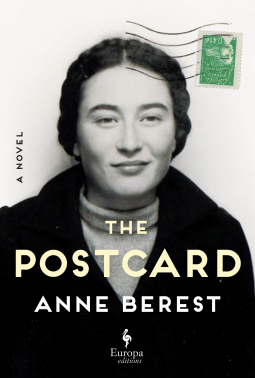
Review 2225: The Postcard

Although sold as fiction, I believe that The Postcard is very much autobiographical and historical, the story of the fates of Berest’s relatives and her own search for an identity.

The search begins with a postcard, one that arrived years before but that Anne’s mother Lélia shows her much later. It is an old postcard containing only the names of Anne’s grandmother’s parents, sister, and brother. All of them died in Auschwitz. The postcard is addressed by another hand to Lélia’s mother Myriam, but at Lélia’s address, where Myriam did not live. It is a mystery. Is it a threat? A reminder?

Myriam has never spoken about their family’s past and now she is dead, so both Lélia and Anne have grown up knowing very little about their family, Ephraïm and Emma Rabinovitch and their children, Noémie and Jacques. Since receiving the postcard, though, Lélia has built up an archive of documents about the history of the family up to when they were deported by the French government. The first part of the novel covers this history.

The further sections of the novel are about Anne’s attempts to discover who sent the postcard and what happened to Myriam. Why was she the only one missed, and what did she do during the war? And finally, how has her family’s experience affected Anne’s own life?

This is a deeply engaging story and an important one, I think. Although the Holocaust is long past, its effects are still reverberating.

Related Posts

Night

The Invisible Bridge

The Zone of Interest

Review 2222: Bitter Orange Tree

As Omani university student Zuhour pursues studies and friendships in England, she is haunted by thoughts about the woman she considered her grandmother, whom she neglected and avoided before her death. She revisits her family history, from the time when Bint Aamir, an impoverished relative taken in by her grandfather, was ejected, along with her young brother, from their father’s house at the urging of his new wife.

Back in England, Zuhour befriends Suvoor, a wealthy girl of Pakistani heritage brought up in England. Suvoor is devastated because her sister, Kuhl, has chosen a young man who she deems socially unworthy of their family. But Zuhour grows closer to Kuhl instead of Suvoor.

This novel is a poetic examination of the past and future of this character, where her contemplation of Bint Aamir’s life—in which her father did not permit the only marriage she was asked for—seems to predetermine her own—in which she is in love with her friend’s husband. The most interesting parts for me were the historical ones. The novel refers often to Zuhour’s dreams and sometimes seems dreamlike itself, but I didn’t feel touched by it. I read this book for my James Tait Black project.

Related Posts

A Thousand Splendid Suns

And the Mountains Echoed

In the Shadow of the Crescent Moon

Review 2211: Horse

This novel tells the story of a famous racehorse and the people connected to him evoked through some objects—his own skeleton and three portraits of him. Although the main characters in the novel are fictional, many of the historical characters are not. The horse, Darnley, who is renamed Lexington, is still considered one of the best racehorses of all time, and many of his offspring have been champions.

In 2019 Theo is a Nigerian graduate student of art history at Georgetown. He plucks a painting out of the trash of his neighbor. It is of a horse, and he recognizes that it is well painted, so he decides to write an article about having it cleaned and valued.

Jess is the head of a lab at the Smithsonian that cleans and articulates animal skeletons for display and study. She has recently located the skeleton of the famous race horse Lexington for a scholar studying equine bone structure when Theo brings in his cleaned painting. Jess recognizes it immediately as one of Lexington painted by Thomas J. Scott, a 19th century horse painter.

In 1850, 13-year-old Jarrett is a slave working with horses for Dr. Warfield in Lexington, Kentucky. Jarrett’s father, Harry Lewis, is a well-known horse trainer who has bought his own freedom and is saving to buy Jarrett’s. Jarrett is with Alice Carneal when she gives birth to Darnley, the horse that will be renamed Lexington. After a promise from Warfield to give Darnley to Harry instead of his yearly wage, Jarrett develops a close relationship with the horse.

Thomas J. Scott is a young artist who specializes in painting horses and is hired by Warfield to paint some of his horses. While he is there, he paints a copy of his picture of Darnley and gives it to Jarrett. Later, he returns to paint an older Lexington.

These are the characters whose points of view are used to tell the story of Lexington. Brooks’s story is based on what is known of the real horse and characters with some inventions. It’s an interesting story with vivid descriptions of the races, of 19th century New Orleans, and of the racing industry of the time. It also has strong themes of the effects of slavery, racism, and cruelty to animals.

Related Posts

Horse Heaven

The Sport of Kings

People of the Book

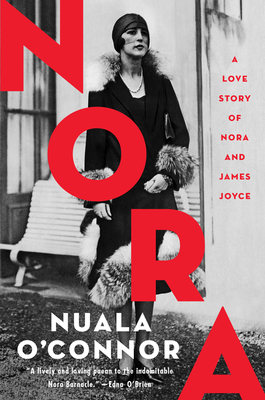
Review 2203: Nora

Nora is based on the movements of Nora Barnacle and James Joyce and on their letters, many of which, apparently, were quite explicit.

On an acquaintance of only a few, heated months, Nora Barnacle goes off with James Joyce to live in Europe despite his not believing in marriage. In 1904, she is 20 and has been working in a Dublin hotel after fleeing her family in Galway.

The life she takes on is difficult. Not only are they very poor and have no permanent abode after the job Joyce was promised at the Berlitz school in Zürich turns out to be a scam, but Joyce himself is difficult. He is a drinker and a spendthrift who buys gifts with the rent money. He is a jealous man who may not be faithful himself and likes to hear about the men Nora knew before him. He is selfish and superstitious, usually certain of his own abilities but not always.

As their life continues, Joyce gets work but never stays satisfied with it. He quits gainful employment to pursue fanciful projects. They have to borrow from his friends and family and move from place to place. Although he is gaining literary fame, he has trouble getting his books published without censorship. He leaves Nora home alone with the children to go drinking with friends and sycophants. Then there is the war, and his failing eyesight.

This is a fascinating depiction of a complex relationship. Aside from the difficulties of living with Joyce and a peripatetic life, Nora has to deal with family pressures and a mentally ill child. Yet her relationship with Joyce is one of fierce passion and love. Although I am not comfortable with explicit sex, I was otherwise wrapped up in this story.

Related Posts

Miss Emily

A Country Road, A Tree

Ghost Light

Review 2201: Homecoming

To a certain extent, you know what you’re getting with a Kate Morton novel—a split time-frame story with family secrets revealed. The storytelling is always very well done, and more often than not, the story is engrossing. Homecoming is no different.

On Christmas Eve, 1959, Percy Summers is riding past Halcyon, the estate in the Adelaide Hills recently purchased by Thomas Turner, when he trespasses to water his horse in the river. By the river, he finds Isabel Turner and her children apparently asleep near the remains of a picnic. Only they’re not asleep. In his shock, Percy fails to notice a basket hanging from a tree—where Isabel put her baby. Later, everyone realizes the baby is missing.

In 2018 London, Jess is summoned home to Sydney because her grandmother, Nora Turner-Bridges, is seriously ill, having fallen while trying to go up to her attic. Jess, a currently unemployed journalist, has not been home in 20 years, but it was her grandmother who raised her.

Nora has told Jess stories about her brother Thomas, but it is not until she begins looking through Nora’s things for a letter Nora’s caregiver said upset her that she learns Thomas had a house in the Adelaide Hills where his family was killed when he was abroad. Jess can’t believe Nora never told her about this. In fact, she finds a book about the crime in Nora’s bedroom.

While Jess investigates the old crime, we learn about it from flashes back and from the book she found, which is contained in its entirety. For me, this was an unfortunate choice that made the slow unwrapping of the plot more artificial, particularly because it is far too short to really be a book. However, I got used to it.

There were several big mysteries wrapped within this crime, but the two big ones are, what happened to the baby? and did Isabel poison her family? I was fairly sure I knew the answers to both early on, but I didn’t guess the details or complications. In all, I felt that this novel, while not my absolute favorite of Morton’s books, was right up there.

Related Posts

The Forgotten Garden

The Secret Keeper

The Lake House

Review 2195: Catriona

I was unaware until recently that there is a sequel to Robert Louis Stevenson’s Kidnapped, but there is, Catriona, and it begins right where the previous novel left off. (Note that apparently this novel is sometimes called David Balfour.) David Balfour has been confirmed in his estate and is ready to learn to be a gentleman, but first, he has some old business to take care of. He must arrange a ship to take his friend Alan Breck Stewart to France, and he must appear as a witness in the Appin murder case, for which he himself is wanted, to free James More, who is innocent.

The problem with this second plan, he finds when he visits the Lord Advocate’s office in Edinburgh, is that no one wants James More, who may not be guilty of Appin’s murder but is guilty of a lot else, to go free. David’s challenges are further complicated when, in the approach to the Lord Advocate’s house, he meets Catriona Macgregor, James More’s daughter, and falls instantly in love with her.

Conscientious David will not agree to any of the compromises proposed by the various lawyers as alternatives to his testimony, so David finds himself kidnapped again in an attempt to prevent him from testifying. So begins another set of adventures for our hero as well as for the innocent but feisty Catriona.

Kidnapped has long been my favorite Stevenson adventure but I liked Catriona very much.

Related Posts

Kidnapped

Treasure Island

Waverly

Review 2194: The Marriage Portrait

Maggie O’Farrell’s latest novel is loosely based on the life of Lucrezia di Cosimo de Medici, who in 1560 at the age of 15 went to Ferrara to take up her married life with Alfonso II d’Este and was dead within a year, rumored to have been murdered by her husband. None of this is spoiler information. It’s explained before the novel begins.

At the beginning of the novel Lucrezia arrives at a remote country fortress with only her husband and some of his men. Her personal maids have been left behind. Lucrezia is sure her husband is going to murder her.

Then the novel returns to trace her childhood and young womanhood in the Medici family. There, she and her sisters are brought up entirely confined to a few rooms of the house and occasionally allowed outside. On the other hand, she has the example of her parents’ marriage, still loving, with both parents collaborating even in political decisions.

Lucrezia is not a favorite child. She has a core of resistance in her, and she prefers painting small, detailed pictures from nature to social pursuits. Fatefully, when she is ten, she briefly meets her older sister Maria’s fiancé, Alfonso II, heir to the Ferrara dukedom. When Maria dies before her marriage, Alfonso says he is open to taking Lucrezia instead, although she is only thirteen.

At fifteen, she marries Alfonso and travels with him to Ferrara to begin her marriage. At first, all seems well. His initial encounter with her was reassuring and he seems kind. Of course, she has to deal with knowing no one except her maid and not even understanding the servants’ dialect. Clothing and hair styles are different. And although she has much more freedom, she begins to learn that Alfonso’s ideas of marriage aren’t like her parents’. He wants her to obey him immediately no matter what he asks, and he doesn’t tell her what’s going on or want her to know anything. She appears to have no responsibilities, so she spends her time painting or socializing with his two sisters.

But slowly she learns that she only has one role in the family—to produce an heir. And Alfonso is known never to have fathered a child. Also, Alfonso is not as benign as he first appeared.

I found this novel absolutely fascinating with its convincing portrait of life in Renaissance Italy. The descriptions are detailed, and although Lucrezia is naïve, she is also a person who notices things. With growing dread, we observe her trying to make sense of this new world, with almost no preparation from her parents. As usual, O’Farrell is a deft writer who knows how to keep readers pinned to the page. I loved this one.

Related Posts

Blood & Beauty

Hamnet

The Marriage Game

Review 2192: Act of Oblivion

It’s hard to know where sympathies might lie in this historical novel set right after the Restoration, in 1665. On the one hand, there is Richard Nayler (a fictional character), tasked with finding and taking to trial (or later, just plain executing) those deemed responsible for killing Charles I. A mighty task, but he performs it so zealously, not minding a dirty trick or two.

On the other hand, there are Colonel Edward Whalley and his son-in-law Colonel Will Goffe (historical characters), on the list because they signed the King’s death warrant after an illegal trial. They have escaped to America, but Nayler blames them for the death of his wife (in premature labor after they broke in on a religious service on Christmas Day, deemed illegal under Cromwell, and arrested people) and is determined to catch them.

Robert Harris states that this hunt for the regicides was the greatest manhunt of the 17th century so we may assume that’s his motivation for the book. Although I’m not particularly interested in the Puritan period of New England history, certainly there are interesting things I didn’t know disclosed in this novel, like the history of New Haven. In addition, Harris depicts the wildness of New England at this time more vividly than anything else I’ve read.

Harris manages to raise the tension of the novel at the end, when Nayler, long after everyone else has lost interest, finally locates Goffe, but overall, I was too turned off by the deeds on both sides of the English Civil War (usually I favor the Royalists, but he shows just how brutal both sides were) to care much about these antagonists. I read this book for my Walter Scott Prize Project.

Related Posts

Beheld

The Witches: Salem, 1692

An Officer and a Spy

Review 2186: Eyes of the Rigel

This third novel in Jacobsen’s Barrøy trilogy has Ingrid Barrøy leaving remote Barrøy Island at the end of World War II to find the father of her daughter. Alexander was a Russian prisoner of war whom she rescued after the prison ship, Rigel, sank.

Ingrid only has faint leads as she rows, walks, takes the train, and rides the bus from one place to another in Norway, bringing her infant daughter with her. She starts with the people she left Alexander with after she smuggled him off the island and follows the trail from one person or location to another. None of the people she meets seem eager to help her, and she continually feels that they are lying. Ingrid is surprised to learn that not all people are happy the war is over, and she is naïve about lingering resentments and distrust.

I have been completely entranced by these books and felt that this was a fitting ending to the series. Ingrid is brave and determined, the writing is beautifully spare, the journey difficult and unpredictable.

Related Posts

White Shadow

The Unseen

A Town Like Alice