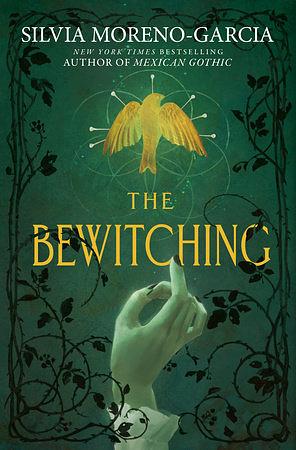
Review 2719: The Bewitching

Maybe this isn’t fair, but I make it a practice to write up every book I read, even if I don’t finish it. In this case, I didn’t get very far in at all.

I liked Moreno-Garcia’s Mexican Gothic well enough to finish it even though it was a slow starter and had a frankly ridiculous concept. (At least it was original.) However, it did maintain a suspenseful atmosphere. So, I picked up The Bewitching by impulse at the library.

This story, set in two time frames and two countries, is really a slow starter.

In 1998, Minerva is a graduate student at a New England university who is having trouble getting access to the information she needs about the life of horror writer Beatrice Tremblay for her Master’s thesis. (As a former graduate student in English, I would like to point out that biography is not a usual focus of literature theses.) Oh well, unexpectedly she gets a chance to talk to the woman who has the source material she needs.

In 1908 Mexico, Minerva’s grandmother Alba lives what she considers a provincial existence and is entranced by her sophisticated but apparently ne’er-do-well uncle.

This was such a slow starter, and I thought I could foresee at least part of silly Alba’s story. Each time the novel went back in time, her story kept slowing down whatever pace the more modern story managed to accumulate. I only made it about 50 pages but decided to quit when the narrative again slowed down to a slog. I generally am patient with slow-moving novels, especially if I’m being entertained in some way, but in this case, I just didn’t feel as if my patience was going to pay off.
Related Posts

Mexican Gothic

The Witching Tide

The Empusium

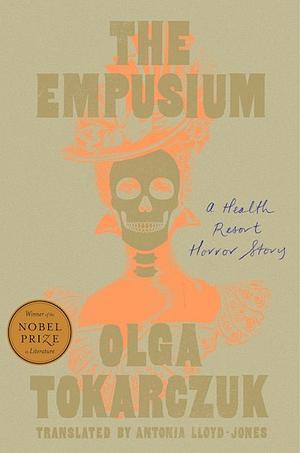
Review 2687: The Empusium: A Health Resort Horror Story

In terms of the horror story it’s labeled as, The Empusium may end like one, but it spends more time building up to its climax than on the horrible part. Or maybe horror is the attitudes toward women expressed by the men.

Mieczyslaw Woznicz is a very young Polish engineering student who arrives in a remote mountainous town in Silesia for treatment for tuberculosis in the early 20th century. He is staying in the guesthouse for gentlemen until he gets a place in the sanatorium. The guesthouse is run by Willi Opitz and his wife, but his wife dies almost immediately on Woznicz’s arrival.

I don’t know if it’s helpful from the beginning to understand what empusa are or not. I had to look it up. but from the beginning we are occasionally reminded that someone is watching everything. Still, this is something I tended to forget.

A lot of the novel deals with Woznicz’s sense of unfitness and inferiority, which has been enforced by his father’s constant expression of disappointment in him. But we also get to read lots of philosophical discussions among the men, which always end in misogyny.

Occasionally, readers are told a lot of bizarre folklore or visit some unusual site in the forest, and these incidents are leading up an annual fall event. Woznicz feels he has a shameful secret, but he’s going to learn more about himself by the end of the novel.

Tokarczuk is a writer whose books are totally different from each other. This one isn’t my favorite, but it is atmospheric and full of irony. It is said to share some characteristics, including plot points, with The Magic Mountain by Thomas Mann, a book I haven’t read.

Related Posts

Drive Your Plow Over the Bones of the Dead

Flights

The Books of Jacob