Review 2442: Killing Me Softly

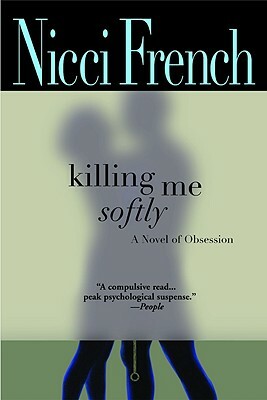
Although I have lost track of it, I followed Nicci French’s series featuring psychoanalyst Frieda Klein for some time. So, when I was looking through my To Read list for books published in the missing years for my A Century of Books project, I picked out Killing Me Softly, which is a stand-alone.

Alice Loudon is bored with her job, but she is happily involved in a relationship when she locks eyes with a startlingly attractive man while crossing the street. When she comes out of her workplace later, he is waiting for her, and they begin a torrid affair. His name is Adam Tallis, and he is a well-known mountaineer. He is intent and possessive, but it’s as if Alice is possessed by him. At one point, she tries to break it off, but she ends up instead breaking up with her boyfriend.

Sex is an important part of their life, and Alice finds herself agreeing to practices that are farther and farther from the norm. She drops most of her friends and can’t concentrate at work. In addition, she and Adam are receiving threatening messages.

Alice finds that Adam is the hero of an incident he has refused to talk about, in which several people died on a mountaineering trip when a storm came up. But there’s a lot Adam won’t talk about, and Alice begins to believe that he has secrets.

Nicci French is a master at building suspense, and this novel is no exception. Although Alice is not an entirely likable character—she pulls several deceptions over people to get at the truth—we can’t help but be on her side.

Related Posts

Thursday’s Children

Friday on My Mind

Dark Saturday

Review 2439: Classics Club Spin Result! The Prophet’s Mantle

I picked this book out of my collected works of E. Nesbit for the Classics Club as one of her first novels for adults. In fact, it is her first novel. So, I wasn’t aware until I looked for a hardcopy that it was publicized under the name of Fabian Bland. In fact, I was confused, because some editions showed both names, so I thought they were two different people. I don’t agree with the custom some publishers use of listing works under the most well-known name just to make more money, but I have had to revise my listings of this work because of this error and listed both so as not to confuse.

In the prologue to this novel, Count Michael Litvinoff prevents Armand Percival from drowning himself after gambling away all his money. Litvinoff takes Percival as his secretary to Russia. But Litvinoff is the author of a pamphlet that the Russian authorities deem dangerous, so the two have to flee. On the trip, it is reported that the secretary is killed by their Cossack pursuers.

It takes a while to see the connection between this story and the body of the novel, which begins with two brothers, Richard and Roland Ferrier. Their father leaves his mill to both of them, hoping to keep them friends, as they are rivals for the same girl, Clare Stanley. If they can’t run it together, the business will fold.

However, Richard believes a rumor in the village that Roland is responsible for the disappearance of Alice Hatfield, the assumption being that she left because she was pregnant. When Roland learns this, the two become unreconciled and the mill is closed. It’s clear from the beginning that Roland knows nothing about Alice, though.

In London, we again meet Count Litvinoff, a Nihilist (although Nesbit doesn’t seem to understand what one is, and although there is a lot of discussion about revolutionary principles, no one actually states what the characters believe) who has published several books and has been speaking around town. Clare Stanley is in town, and she is trying to attract the count, but after she hears a talk by another Russian, Mr. Petrovich, she begins to be interested in the cause. It soon becomes clear that it is Litvinoff, not Roland, who is responsible for Alice’s plight.

It’s not long before several plots are going. Who will win Clare? What will happen to Alice? Who is the mysterious Petrovich? Is Litvinoff a hero or a villain? Will Richard and Roland make it up? And what about the poor mill workers?

Despite its revolutionary theme and good intentions, I fear the mill workers get the short shrift. This novel goes in too many directions to really do a satisfactory job in 159 (small print) pages. I guessed all its secrets almost immediately, and only Litvinoff has anything approaching a rounded character. The novel is supposed to have a stunning romantic ending, but I wasn’t interested enough in the characters to care much. I think Nesbit’s young revolutionary fervor (she was a Fabianist) gets in the way of this being effective fiction.

Related Posts

That Lass O’Lowrie’s

Challenge

Sofia Petrovna

Review 2437: The Guest Room

Tess’s grief over her sister Rosie’s murder four months ago is taking obsessive forms. First, she wanders all over London late at night hoping someone will try to attack her, as Rosie was found beaten to death on Hampstead Heath. She has moved into Rosie’s flat and is harassing Rosie’s ex-boyfriend. In addition, she constantly calls the police detective on the case offering obscure clues.

Unable to face Rosie’s bedroom, Tess offers it as a B&B, letting it out short-term to help make the mortgage. She has also taken a job at the Barbican, where Rosie used to work.

Tess leases the bedroom for a longer term than usual to a potter named Arran. As she does with all her tenants, when they are away, she looks through their stuff. In Arran’s things, she finds a diary about his infatuation with a woman. At times, it sounds like he is stalking her.

Tess doesn’t know it, but someone is stalking her. Is it her annoying downstairs neighbor, Luke? Her geeky across-street neighbor, Elliott? Or someone else?

This novel moved along pretty well and kept me interested, but Tess isn’t exactly a likable heroine. I was less bothered by that than my feeling that it was fairly easy to guess who Arran is writing about and although I wasn’t absolutely sure, the possibility of one character being the murderer occurred to me, and I was right.

Related Posts

Dark Side

The Girl on the Train

Accidents Happen

Review 2430: The Other Side of Mrs. Wood

In 1873 London, Mrs. Wood is the most successful medium in society. She is worried about the future, though, because her patrons are getting older and at 40, she doesn’t seem to be appealing to the younger folks. To make things worse, Mr. Larson, who takes care of her money, has just informed her that a large investment in a mine has been lost. Things are going to be tight until some ships he invested in arrive.

Mrs. Wood cuts where she can, but unfortunately her profession requires her to have an appearance of respectable wealth.

A girl has been hanging around outside her meetings, which are invitation only. When Mrs. Wood catches her, a Miss Finch, she learns that Miss Finch would like to become her student. She says she has some talent. Without consulting her friend and assistant, Miss Newman, Mrs. Wood decides to take her on, thinking that as a young, attractive girl, she will attract younger patrons.

Miss Newman distrusts Miss Finch, but Mrs. Wood goes ahead with her plans, even excusing some costly mistakes that Miss Finch makes. What she doesn’t know is that Miss Finch’s intentions are bad ones and that she knows more about Mrs. Wood’s past than Mrs. Wood thought anyone knew.

Without remembering any synopsis of this novel, I immediately distrusted Miss Finch, getting a growing feeling of dread that stalled me a bit in my reading. I also felt that the middle part of the novel went on a bit too long. However, when Mrs. Wood pulls herself together, the culmination is very satisfying. I think the very end of the book, though, was a bit unbelievable.

If you read my blog, you know I’m a stickler for accuracy in a historical novel, although not an expert in the details. However, just as a side note, Barker uses the word “twee” on page two, not in conversation but in the main character’s thoughts. I thought that seemed like a modern word, so I looked it up. Sure enough, it was not in use until 1905. Oops!

Related Posts

The Séance

The Haunting of Alma Fielding

This House Is Haunted

Review 2311: Big Ben Strikes Eleven

Financial tycoon and former politician Sir Robert Boniface is found shot to death in his limousine in the Vale of Health on Hampstead Heath. At first, the police aren’t sure if the death is murder or suicide—only the lack of the gun tells them it is murder.

The body is discovered by a window washer, but Matt Caldwell, an artist, is present in a nearby pub. He is not only able to identify the victim and his car, having painted Sir Robert’s portrait, but he is happy Sir Robert is dead.

Enquiries by Inspector Beckett and Superintendent Mooney lead in the direction of Sir Robert’s nephew, Frank Littlewood, who was recently fired by Sir Robert. However, two office mates, Sir Robert’s confidential secretary Miss Pritt and the obsequious Mr. Fuller, seem too eager to drop him in it.

Then the police find the gun and establish that it belongs to Matt Caldwell. Unfortunately, he is nowhere to be found.

I haven’t paid much attention to this issue until other bloggers pointed it out about other novels, but I would say this novel is about 100 pages longer than it needs to be. First, the action is brought to a screeching halt while the author lays out the case against the original three suspects—as if readers haven’t been paying attention—then we follow Matt Caldwell’s progress in a completely unnecessary romance that coincidentally brings more clues to light. The information is important, but it seems as if it could have been introduced in a different way that didn’t take two or three chapters.

But my biggest problem was with the actual investigation. Early on, Miss Pritt tells the police that the murder had nothing to do with business and uses that reason to withhold information about Sir Robert’s appointments. And the police just go along! Later, the Superintendent just hands her her handkerchief, which he found at the scene of the crime! In other ways, the approach to evidence is just as casual.

Finally, an interview with the Earl of Rollesborough, on the board of the trust that Sir Robert works for, seems called for from the beginning but doesn’t take place until the end. And no wonder, because it pretty much makes everything obvious.

I was able to identify the murderer fairly early on, but that didn’t bother me as much as the sloppy police work, or possibly lack of knowledge about police work.

I received this novel from the publishers in exchange for a free and fair review.

Related Posts

Death of an Author

Death of Mr. Dodsley

Partners in Crime

Review 2306: The Midnight News

Is The Midnight News a love story? a murder mystery? an espionage tale? a story about a dysfunctional family? an exploration of how the stress of war affects people psychologically? I’m not telling.

Charlotte is the daughter of privilege. Her father is a peer and a member of Parliament with an important war job. But Charlotte has chosen to work as a typist in a government office and live in a respectable but middle class boarding house.

It is the Blitz, and Charlotte’s home is in a dangerous area south of the Thames. She and the other residents of the house have been spending their nights on the lowest level of the house.

The novel starts slowly. Charlotte spends a day with her best friend, El, who has been elusive lately. Then El is killed in the Blitz. Charlotte goes to visit her godmother, Saskia, after she hears that a well-known actress, a schoolmate, has also been killed. Then Saskia dies, too. Charlotte has noticed a square gray man in several different places and comes to believe he is following her and killing people she is close to. This may seem like a wild idea, and since Charlotte has begun hearing the voices of her dead friends and has a history of mental illness, we begin to worry about her.

Then there is Tom, the son of an undertaker whom Charlotte has noticed feeding the birds. He is waiting to hear about a scholarship and a place at King’s College, but notifications are delayed because King’s has been hit in the Blitz. He is in love with Charlotte but thinks she is above him.

Is Charlotte being followed or is she paranoid? Is there something else going on? This novel eventually because a fast-moving, tightly plotted, and satisfying tale.

Related Posts

The Body Lies

A Country Road, A Tree

Longbourn

Review 2301: Someone from the Past

I found Someone from the Past to be the best of the British Library Crime Classics I’ve read so far. It has a smart, feisty, occasionally indiscreet heroine, is fast moving, sometimes exciting, and presents an interesting, character-based mystery.

Nancy is at a restaurant about to receive a proposal from her boyfriend Donald when her estranged friend Sarah approaches the table. This approach creates some awkward moments, because Donald was the last in a string of Sarah’s lovers and didn’t take her departure well. Finally, he leaves the table so the women can talk.

Sarah tells Nancy she is about to marry a wealthy man, Charles. Then she says that someone has been writing her letters threatening her life. As Nancy is a reporter and knows all the suspects—Sarah’s discarded boyfriends—Sarah asks her to try to find out who is writing the letters. She says she’ll send her one of them in the morning.

Nancy’s evening ends poorly, with Donald stomping off. But the next morning, he arrives at her flat, confused and frightened. He tells her he went to see Sarah in the early hours of the morning and ended up falling asleep in the sitting room. When he awakened shortly after eight, he found Sarah murdered in her bed. He is sure the police will think he did it.

To protect Donald, Nancy lets herself into Sarah’s apartment and tries to remove all traces of his visit. In doing so, she notices some odd things about the scene. Unfortunately, when the cleaning lady arrives, Nancy puts the chain on the latch instead of hiding or going out another way so it was obvious someone was in the flat.

Shortly after she arrives home, the police are at her door. They think she killed Sarah, partly because she left her own fingerprint in the apartment and because the cleaning lady recognized her when Nancy met one of Sarah’s other lovers in a pub before going home. Nancy thinks the only way to clear herself and Donald is to figure out who did it herself. The list of suspects consists of Sarah’s last four lovers, including Donald.

Nancy finds she isn’t very good at lying to the police, keeping secrets, or fleeing the country, but she is good at figuring out clues. I’m not so sure she’s that good at picking future husbands, though.

I received this book from the publishers in exchange for a free and fair review.

Related Posts

In a Lonely Place

Excellent Intentions

Water Weed

Review 2295: Frederica

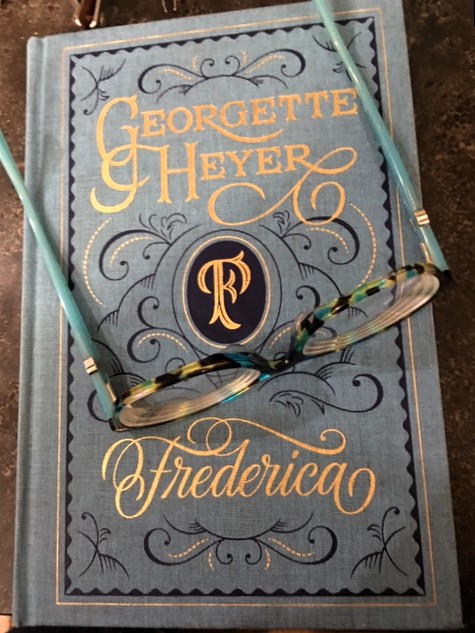
I didn’t set out to reread Frederica, but the Folio Society just brought out a couple of beautiful editions of some of Heyer’s books, so I had to buy them. My original review is here, but I thought I’d talk about some things that struck me this time around.

Heyer has a great sense of humor, and I was tickled by the situation that brings about the climax of the book. Frederica has spent a good deal of ill-afforded money and enlisted Lord Alverstoke’s help with the aim of making a good match for her beautiful but dim-witted sister, Charis. Unfortunately, Charis has fallen in love with Endymion Dauntry, Alverstoke’s handsome but stupid heir. Frederica is skeptical of Charis’s affections because she has fallen in love many times before. Endymion has convinced himself that Alverstoke would prevent the match by having him sent on a mission. Not only does Alverstoke have no power to do so, but he doesn’t really care who Endymion marries. He thinks Endymion isn’t serious because he hasn’t consulted him about getting married.

The incident with the dog in the park

Endymion is friends with Harry, Charis’s and Frederica’s brother, and the two have been confiding their star-crossed misfortunes to him. Frederica makes him angry for some trivial reason, and he suddenly realizes he is Charis’s guardian. So, the three of them stage a totally unnecessary runaway marriage.

Felix and Jessamy, Frederica’s young brothers, are especially delightful characters. Heyer is an amusing writer and a master of silly situations such as the one that Charis and Endymion create for themselves.

Related Posts

The Corinthian

The Grand Sophy

Arabella

Review 2288: Arabella

Merry Christmas, everyone! Here’s a romp for Christmas Day.

The vicarage children are excited to learn whether their mother’s best friend will invite their sister Arabella for a season in London, in the hopes she can make an eligible match. The invitation arrives from Lady Bridlington, and then the worry is that the upright Reverend Tallant will not allow her to go.

Soon Arabella is on her way to London from Yorkshire. But the perch of her uncle’s old carriage breaks, and she sees nothing wrong with going to the nearest house for shelter. Unfortunately, it is the hunting box of Robert Beaumarais, a leading figure in society and a very wealthy man, who assumes she is one of many girls trying to make his acquaintance. When she hears him saying this to his friend Lord Fleetwood, she says she is the rich Arabella Tallant, who hoped to be unrecognized in London.

Beaumarais sees through this lie but maliciously lets the indiscreet Lord Fleetwood think he knows about her. He also decides to make her debut a sensation. Soon, Arabella is a success but doesn’t dare accept anyone’s proposal because she realizes that they all think she is rich, whereas she has no money at all.

Although she is in an awkward position, she is enjoying herself. But then her brother Bertram, who is supposed to be at Oxford, arrives and begins to get himself into financial difficulties. To make things worse, Arabella has begun to realize she cares for Beaumarais and is afraid to admit her deceit.

Arabella is an adorable heroine, and Beaumarais a likable hero, as he fondly watches her dig herself deeper into trouble, hoping she will confide in him. Heyer is at her best and funniest with these absurd plots.

Related Posts

Cotillion

Frederica

Friday’s Child

Review 2282: #DeanStreetDecember! Company in the Evening

I finally could fit a book for Dean Street December into my schedule! This event is being hosted by Liz of Adventures in Reading, Running, and Working from Home.

In 1940 London, Vicky is fairly satisfied with her life. Five years ago, in the midst of divorcing her husband Raymond for infidelity, she discovered she was pregnant. But she is getting along fine raising her daughter Antonia with the help of an old family retainer, Blakey. She works three days a week as a literary agent and devotes the other days to Antonia. She is an independent woman who doesn’t feel the need for company except for an occasional visit or outing and dislikes sentiment and receiving sympathy.

However, she finds herself inviting company when her mother tells her she’d like to sell her house and move in with her sister. The problem is what to do about Rene, Vicky’s widowed and very pregnant sister-in-law, who has little money and no family and lives with Vicky’s mother. Vicky has a spare room and feels she owes it to her mother to offer Rene a place to stay, even though she and Rene have almost nothing in common. She has no desire to invite her, but she does.

Soon enough, she becomes convinced that they are incompatible. Her efforts to get along with Rene usually end up being misunderstood. Worse, Blakey dislikes her. She is always brusque, but to Rene she is sometimes disrespectful.

Then Vicky runs into Raymond. The other woman returned to her husband, and Raymond is just recovering from a bout of tuberculosis and hopes to take a desk job in the army. They begin occasionally spending time together.

This novel takes a thoughtful look at marriage and at Vicky’s preconceptions of how marriage should be as she takes another look at what broke up her own. It is an intelligent, witty, and involving story. I liked it very much.

Related Posts

Begin Again

Sally on the Rocks

Bewildering Cares